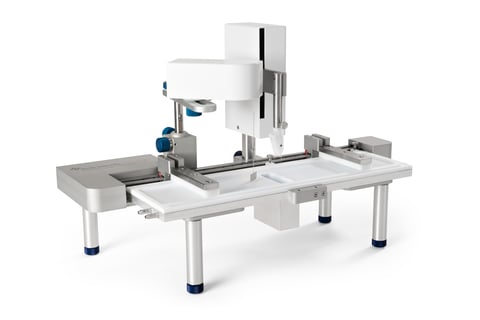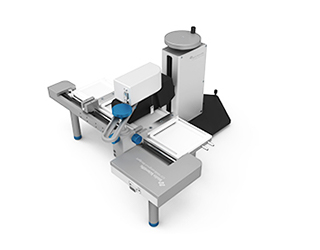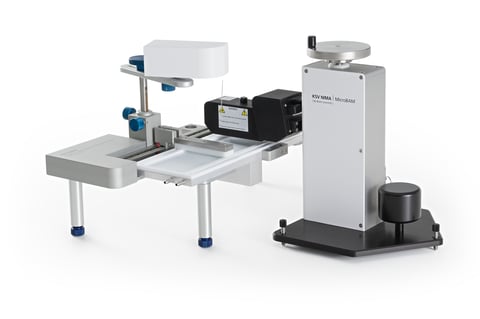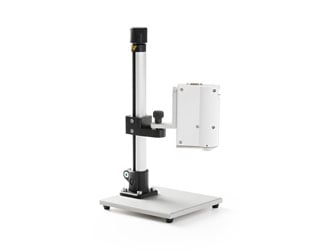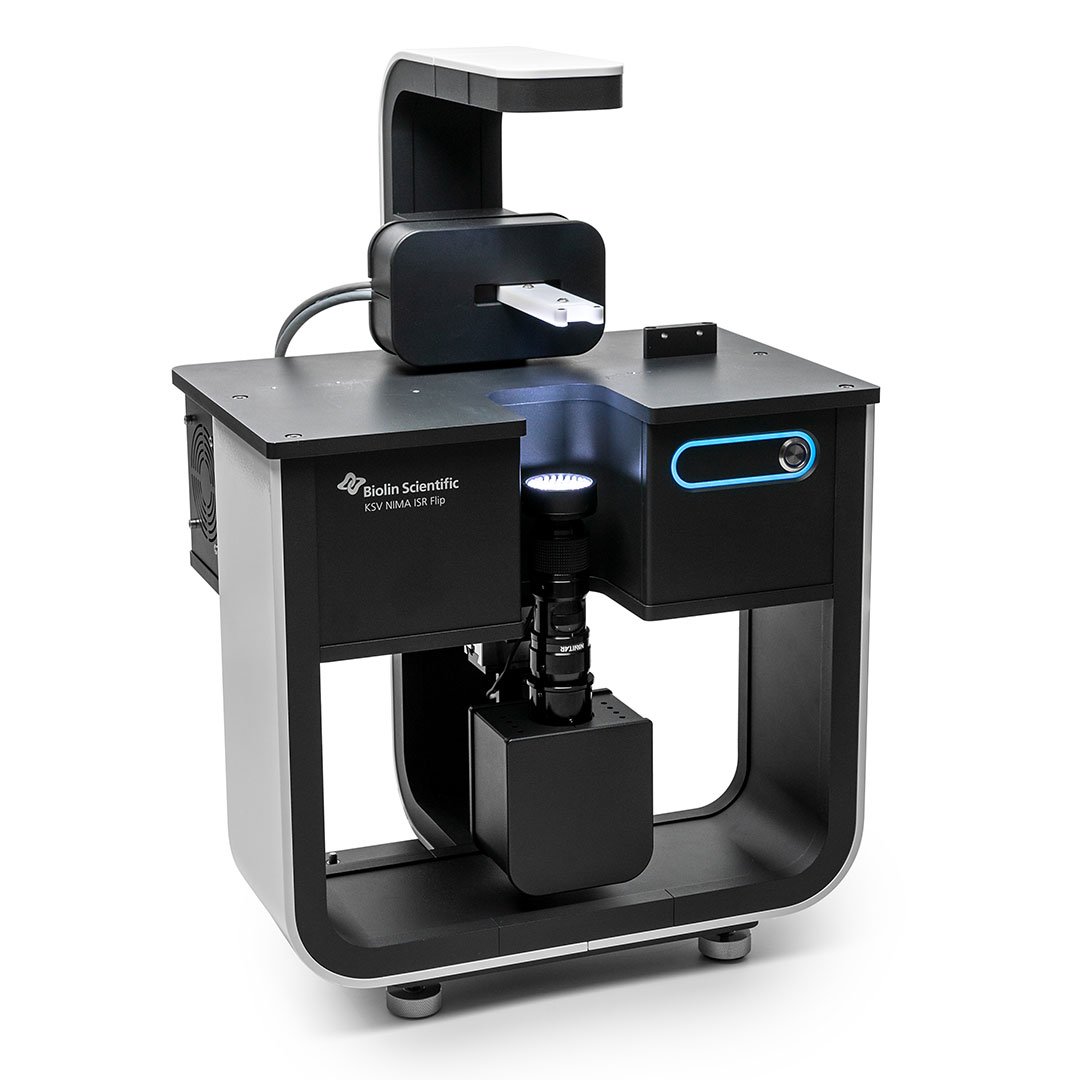
KSV NIMA Langmuir (L) and Langmuir-Blodgett Deposition (LB) Troughs are used for the fabrication and characterisation of single molecule thick films and offer the precision control over the lateral packing density of molecules.
Following characterisation studies of the unique properties of molecules in monolayers, the instruments can also be used to transfer these monolayers using a Langmuir-Blodgett or Langmuir-Schaefer deposition technique. This enables the creation of single and multi-layer films with precise control of thickness, molecular orientation and packing density.

Illustration: various film fabrication achievable with the KSV NIMA L & LB Trough
Biomembranes and biomolecular interactions (e.g. cell membrane model, conformational changes and reactions, drug delivery)
Organic and inorganic coatings (e.g. functional coatings and novel coatings of nanotubes, nanowires, graphene)
Surface reactions (e.g. polymerisation, immunological and enzymatic reactions, biosensors, adsorption and desorption)
Surfactants and colloids (e.g. formulation, colloid stability, emulsion, dispersion, foam stability)
Rheology of thin films (e.g. dilational rheology, interfacial shear rheology with the KSV NIMA ISR)
The instrument used for Langmuir film fabrication (and characterisation) is called a Langmuir Trough or Langmuir film balance. The instrument is named Langmuir-Blodgett troughs when used for Langmuir-Blodgett film or Langmuir-Schaefer film deposition.
KSV NIMA L & LB Troughs are modular and can be used for both Langmuir film fabrication/characterization and Langmuir-Blodgett/Langmuir-Schaefer deposition) when equipped with the right modules. For that reason, KSV NIMA often refers to Langmuir and Langmuir-Blodgett Troughs or just L and LB Troughs.
KSV NIMA Langmuir and Langmuir-Blodgett Troughs enable measurements of:
| MEASUREMENT |
INFORMATION
|
|
Isotherms
|
Structure, area, interactions, phase transitions, compressibility, hysterisis |
| Isobar/Isochors |
Stability |
| Surface potential* |
Dissociation, orientation, interactions |
| Dilational rheology |
Film viscoelastic properties |
| Kinetics |
Polymerisation and enzyme kinetics |
| Conductivity |
Lateral conductivity
|
| Environmental monitoring |
pH* and temperature |
* available as an option
In brief, an aqueous subphase is confined in a shallow chamber in the trough top and the monolayer is compressed by the barriers. Surface pressure changes during compression are measured by the surface pressure sensor. The dipping mechanism is used to transfer the monolayer to a solid substrate. The Interface Unit and KSV NIMA LB software enable data transfer and recording.
 |
1 – Frame 2 – Barriers 3 – Trough top 4 – Surface pressure sensor 5 – Dipping mechanism (LB option) 6 – Interface Unit |
Illustration: KSV NIMA Langmuir-Blodgett Deposition Trough Medium
Visit the L & LB Trough technology page for a complete explanation of the way KSV NIMA L & LB Trough are used to fabricate and characterise Langmuir, Langmuir-Blodgett and Langmuir-Schaefer films. For full information on design and material used, please visit our KSV NIMA trough design page.
All the KSV NIMA L & LB Troughs can be equipped with a Ribbon Barrier Trough top for better monolayer confirnment at very high surface pressure. To read more about it, please visit the KSV NIMA L & LB Ribbon Barrier Trough page.
Ready-made KSV NIMA L & LB Trough
The most popular L & LB trough systems are presented in the following table. Other combination are possible and you can find out about them by contacting your nearest KSV NIMA representative. These systems are explained in the sections below, except the KSV NIMA L & LB Ribbon Barrier trough which you can find on the dedicated product page here.

Illustration: a snapshot of the most common KSV NIMA Langmuir and Langmuir-Blodgett Deposition troughs
KSV NIMA Langmuir Troughs
Conventional Langmuir Trough
The conventional KSV NIMA Langmuir Trough is available in several sizes: Extra Small (lower volume but larger area than Small), Small, Medium and Large. It is important to stress that all systems can be easily switched between the Langmuir, Langmuir-Blodgett and Microscopy configurations. The three smaller troughs use the same frame providing the flexibility to change the trough top size at any time. The Large, Liquid-Liquid and High Compression Troughs (ISR Trough) use larger frames but still allow the use of the smaller trough tops, Extra Small, Small and Medium. The Medium and Large systems can be used with Brewster Angle Microscopes (KSV NIMA BAM only fits on the Large systems) for monolayer imaging. The Small, Medium and Large systems allow the use of KSV NIMA SPOT (Surface Potential Sensor) for monolayer electrical property characterisation and KSV NIMA PM-IRRAS, an infrared technique for determination of molecular orientation and chemical composition.
High Compression Trough (ISR Trough)
A longer but narrower Langmuir Trough enabling high compression ratio. Specifically designed for the KSV NIMA Interfacial Shear Rheometer (ISR), the High Compression Trough can also be used for increased performance with Brewster Angle Microscope (MicroBAM), Surface Potential Sensor, PM-IRRAS and other characterisation instruments.
Liquid-Liquid trough
A Liquid-Liquid Langmuir Trough is available for monolayer studies at the liquid-liquid interface (typically, oil-water). The Liquid-Liquid Trough top is also compatible with the High Compression Trough.
Langmuir Ribbon Barrier Trough
The KSV NIMA Ribbon Barrier Trough enables the study of floating monolayers at high packing densities (e.g. > 70 mN/m for DPPC) by providing superior monolayer confinement. Such high surface pressures are required to study phenomena such as lung surfactant (DPPC) behaviour in alveoli. Visit the dedicated product page for complete information.
It is possible to perform Langmuir-Schaefer deposition with a Langmuir Trough with optional dipping mechanism and LS deposition kit.
Many experimental techniques can be used to further investigate monolayers at the gas-liquid interface even before deposition, including Interfacial Shear Rheometry, PM-IRRAS, Brewster Angle Microscopy and Surface Potential Sensing.
KSV NIMA Langmuir-Blodgett Deposition Troughs
Conventional LB Deposition Trough
The KSV NIMA LB Deposition Trough is available in several sizes: Small, Medium and Large. It is important to stress that all systems can be easily switched between the Langmuir, Langmuir-Blodgett and Microscopy configurations. All Small and Medium Troughs use the same frame providing the flexibility to change the trough top size at any time.
You can deposit LB films on samples ranging in size from a few square millimetres to many tens of square centimetres. Dipping well dimensions, and hence suitable substrate areas, are dependent on the model of trough and trough tops (see specification table). The LB dipping mechanism can also be fitted with a LS deposition kit for horizontal Langmuir-Schaefer Deposition.
Langmuir-Blodgett Ribbon Barrier Trough
The KSV NIMA Ribbon Barrier Trough can be used to study monolayers at high packing densities and deposit them onto solid samples. The KSV NIMA Ribbon Trough enables better monolayer confinement at high surface pressure. Deposition can also be useful to characterise further your film with complementary techniques. Visit the dedicated product page for complete information.
Alternate-Layer Deposition Trough
Also available is the Alternate-Layer LB Deposition Trough for depositing alternating layers of two materials. The KSV NIMA Alternate Layer Deposition Trough enables simultaneous creation of two Langmuir films in two separate compartments. The sample can be moved through any of the two monolayers in the desired order.

Further investigation of your deposited film can be conducted using analytical technique such as PM-IRRAS.
KSV NIMA Microscopy Troughs
The KSV NIMA Microscopy Trough is a special kind of Langmuir Trough, which contains a sapphire window in the trough top base allowing high optical transmission down to a wavelength of 200nm (suitable for visible light or UV microscopy). The Medium and the High Compression Troughs are both suitable for upright and inverted microscopy. The Small Trough can be used for upright microscopy. You can read morew about Langmuir film microscopy here.
Technical specifications and compatibility chart
|
top |
|
|
Extra Small
|
Small
|
Medium
|
Large
|
Liquid-liquid
|
(ISR) High compression
|
Alternate
|
GENERAL SPECIFICATIONS
|
|
|
|
|
|
|
|
Surface Area (cm2)
|
150
|
98
|
273
|
841
|
580 (423*)
|
587
|
930 (x2**)
|
|
Trough top inner dimensions (LxWxH mm)
|
300x50x1.2
|
195x50x4
|
364x75x4
|
580x145x4
|
784x74x7 (784x54x5*)
|
782x75x5
|
775x120x10 (x 2**)
|
|
Maximum compression ratio
|
8.7
|
5.2
|
10.8
|
18
|
24.7
|
24.7
|
5.4
|
|
Barrier speed (mm/min)
|
0.1...270
|
0.1...270
|
0.1...270
|
0.1...270
|
0.1...270
|
0.1...270
|
0.1...200
|
|
Balance measuring range (mN/m)
|
0...150
|
0...150
|
0...150
|
0...150
|
0...150
|
0...150
|
0...150
|
|
Max. balance load (g)
|
1
|
1
|
1
|
1
|
1
|
1
|
1
|
|
Balance resolution (µN/m)
|
4
|
4
|
4
|
4
|
4
|
4
|
4
|
LANGMUIR TROUGH TOP
|
|
|
|
|
|
|
Total subphase volume (ml)
|
18
|
39
|
109
|
336
|
406 (212*)
|
293
|
-
|
LANGMUIR-BLODGETT DEPOSITION TROUGH TOP
|
|
|
|
|
Total subphase (ml)
|
-
|
57
|
176
|
578
|
-
|
-
|
6000
|
|
Dipping Well dimensions (LxWxD mm)
|
-
|
20x30x30
|
20x56x60
|
20x110x110
|
-
|
-
|
133x133x128
|
|
Maximum sample size (TxWxH mm)
|
-
|
3x26x26
|
3x52x56
|
3x106x106
|
-
|
-
|
3x129x114
|
| Dipping speed (mm/min) |
- |
0.1...108 |
0.1...108 |
0.1...108 |
- |
- |
0.1...85 |
UPRIGHT MICROSCOPY TROUGH TOP
|
|
|
|
| Availability |
- |
yes |
yes |
- |
- |
yes |
- |
INVERTED MICROSCOPY TROUGH TOP
|
|
|
|
| Availability |
- |
- |
yes |
- |
- |
yes |
- |
RIBBON BARRIER TROUGH TOP
|
| Availability |
- |
- |
yes |
- |
- |
- |
- |
COMPATIBLE WITH
|
|
|
|
|
|
|
| KSV NIMA PM-IRRAS |
- |
yes |
yes |
yes |
- |
yes |
- |
|
KSV NIMA ISR
|
-
|
-
|
- |
-
|
yes
|
yes |
-
|
|
KSV NIMA MicroBAM
|
-
|
-
|
yes
|
yes
|
-
|
yes
|
-
|
|
KSV NIMA BAM
|
-
|
-
|
-
|
yes
|
-
|
-
|
-
|
|
KSV NIMA SPOT
|
-
|
yes
|
yes
|
yes
|
-
|
yes
|
yes
|
* The Liquid-Liquid Trough is deeper than a standard trough as this allows for the two liquid phases. The value in the brackets corresponds to confinement of the lower phase (other value for the upper phase).
** The Alternate-Layer Deposition Trough is made of two separated compartments for creation of two monolayers simultaneously.
Each of these four colours used in the table correspond to one frame. All Trough tops labelled with the same colour can be placed on the same frame, for modularity.
The KSV NIMA LB software is very intuitive and easy to use. It allows the user to perform a variety of pre-programmed methods which cover the best known L and LB film experiments. These pre-programs can be modified further for particular needs. A wide range of data and parameters can be recorded and the desired data can be easily plotted. The recordable parameters are: data point number, time, barrier position, barrier speed, trough top area, molecular area, dipper position, dipper speed, layer number, transfer ratio, cumulative transfer, temperature, pH and surface potential.
Standard programs include:
Compression/relaxation isotherms
Measuring surface pressure as a function of mean molecular area, remaining area, time or any other measured parameter.
Analysis of monolayer kinetics
Enzyme kinetics, monolayer hydrolysis, polymerisation, or any other zeroth-order reactions).
Analysis of monolayer penetration, solubility and binding of biomolecules (enzymes, proteins, peptides etc.).
Isochores and Isobars
Increase or decrease of surface pressure/temperature, surface pressure/time, or surface pressure/any desired measurable parameter can be plotted.
Dilational rheology
Oscillating barriers for monitoring viscoelastic properties at desired surface pressure.
Dipping
Both Langmuir-Blodgett and Langmuir-Schaefer modes allow the control and monitoring of surface pressure, dipping speed, stroke length, deposition profiles and transfer ratio.
After an experiment has been performed the user can return to the data for further analysis in the data reduction and analysis section. After selecting an experiment the data for that experiment will be displayed. Different experimental data can be displayed on the same graph for comparison. Calculation of additional results and export of data can be done. There is an option of viewing and editing the experimental setup which can be very helpful if the data produced should be recalculated based on new information about the materials.
Full control over your experiment
- Powerful and intuitive software satisfying novice and experienced user’s needs. It is the core of KSV NIMA L and LB instrumentation, enabling complete control and real time display of:
- Surface pressure
- Barrier position
- Barrier Speed
- Substrate position during deposition (LB)
- Dipper Speed (LB)
- Temperature
- pH (option)
- Surface potential (option)
- Manual control keypad with digital display allowing measurement preparation right next to the instrument (Interface unit).
- Comprehensive instruction manual on how to set up the instrument and how to make basic experiments.
- KSV NIMA also provides extensive knowledge and application support enabling you to get the most out of your instrument.
Optimal performance thanks to unique choices in design
- Ultra-sensitive surface pressure sensor for extremely precise measurements. Platinum plates, platinum rod and paper plates can be used as probe to meet all needs.
- Open design enables easy placement of trough tops into the frame allowing substitution with another trough top within seconds and easy cleaning of the trough top surface.
- Langmuir and Langmuir Blodgett trough tops are made from single pieces of pure PTFE for optimized cleanliness and reliability. This unique design prevents any leakage in any part of the trough top including the dipping well. It avoids the use of potentially contaminating glues or other seals.
- Compression barriers are made from Delrin (hydrophilic), for enhanced monolayer stability. PTFE (hydrophobic) compression barriers can also be supplied upon request. A robust metal frame prevents barriers from deforming over time.
- Thin frame design allowing combination of optical characterisation techniques such as PM-IRRAS (infrared spectroscopy), Brewster Angle Microscopy, fluorescence microscopy etc.
- Symmetric barrier compression as a standard for homogenous packing. Single barrier compression is also available with every instrument.
- Centred dipping well allowing uniform monolayer LB deposition.
- Subphase temperature control facilitated by aluminium heat/cool base plate operated by external circulating water bath (the water bath is sold separately).
- Adjustable legs enable fast and accurate levelling of the trough. The legs can be removed easily for trough placement on a microscope.
Your lifetime partner
- Highly modular thanks to a unique exchangeable trough top mechanism which allows combining all Extra Small, Small and Medium trough tops from KSV NIMA Langmuir and Langmuir-Blodgett selection. You can change functionality of your system, at any time: for instance, exchanging a Langmuir trough top to a LB trough top, or selecting a different size of trough top.
- All systems except the Alternate are compatible (directly or after upgrade with a new trough top) with KSV NIMA Surface Potential Sensor, Brewster Angle Microscopes (KSV NIMA BAM and/or KSV NIMA MicroBAM) and PM-IRRAS characterisation instruments
- Instrument design with durable components. Some of our instruments from 20 years ago are still being utilised!
- Wide range of accessories (Horizontal dipping clamps, Surface Potential Meter, pH probe, etc.)
Computer technical requirements
|
top |
Minimum system requirements: 1GHz processor, 512 MB RAM, 40 GB hard disk drive (20GB free), 1024x768 resolution, USB Port, RS-232 Port (for water bath option)
Operating system requirements :Windows xp sp2 (32 bit), Windows Vista Home sp1 and Home premium sp1 (32 bit), Windows Vista Ultimate (32 bit) sp1 and Business sp1 (32 bit) , Windows 7 (32 bit and 64 bit)
At KSV NIMA we understand that the requirements of molecular research experiments can be extremely varied and that our standard products may not offer the exact specifications that you desire. Please contact us to discuss your project or visit our custom project page for additional information.
Specifications and appearance are subject to change without prior notice. Biolin Scientific shall not be liable for any errors in this document.