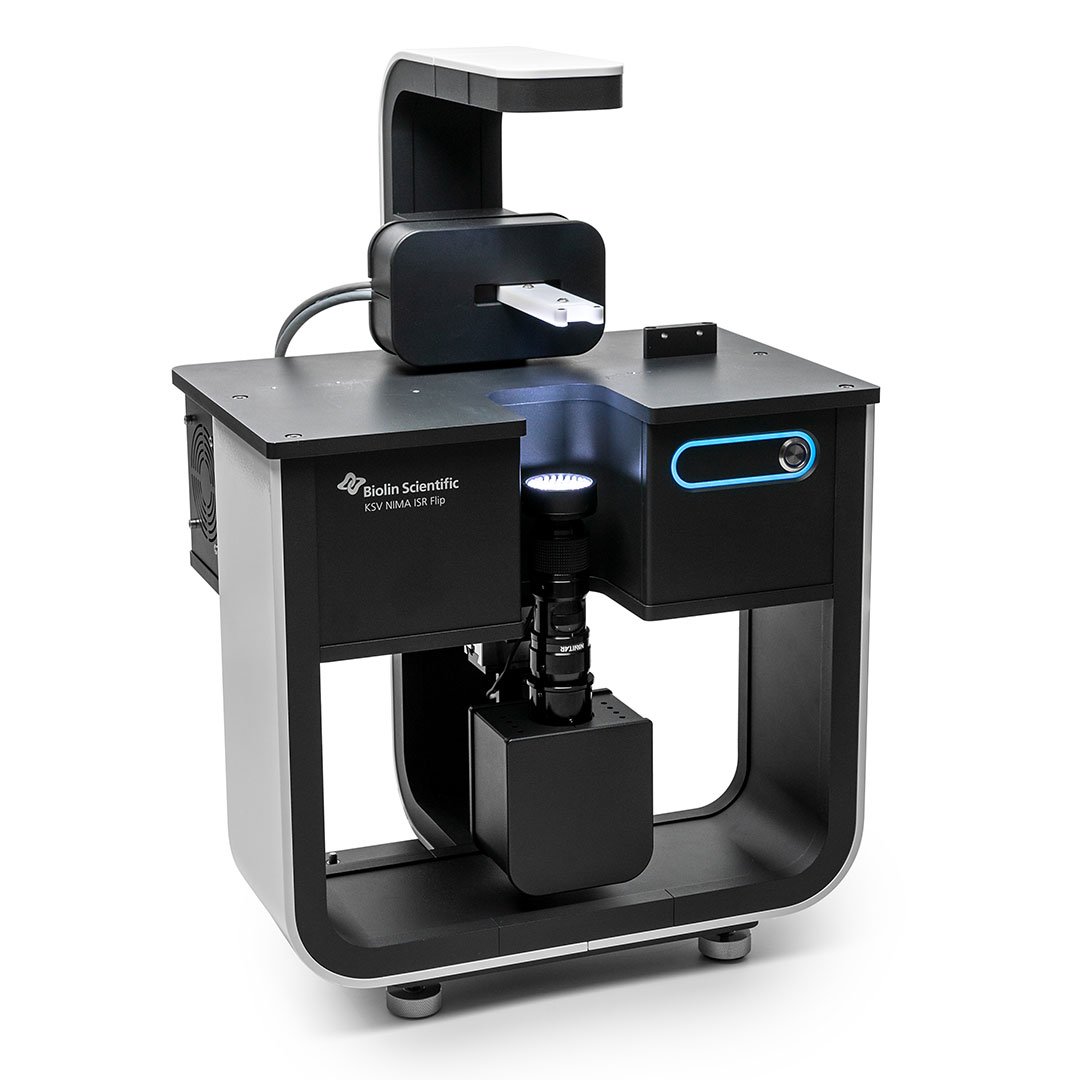
Brewster Angle Microscopy

Brewster Angle Microscopy provides a perfect solution for noninvasive imaging of monolayers at the air-water interface. Real-time observation and recording of film structure enables dynamic activity to be captured.


A Brewster Angle Microscope (BAM) enables the visualization of Langmuir monolayers or adsorbate films at the air-water interface. Visit the instrument page for additional information on possible applications.


Working principle


Brewster Angle Microscope utilizes the fact that when p-polarized light is guided towards an air-water interface, no reflection occurs at a certain incident angle. This angle, the Brewster angle, is determined by Snell´s law and depends on the refractive indices of the materials in the system.


Snell's law:  tan α = n2 / n1

with α the Brewster angle in radians, n1 the refractive index of air (≈1) and n2 the refractive index of water (≈1.33).


The Brewster angle for the air-water interface is 53°, and under this condition the image of a pure water surface appears black. Addition of material to the air-water interface modifies the local refractive index (RI), and hence, a small amount of light is reflected and displayed within the image. The image displayed contains areas of varying brightness determined by the particular molecules and packing densities across the sampling area.


Measurement examples


Monolayer of DMPE during first-order phase transition, contrast in domains caused by long range orientation order.


Stearic acid monolayer formation during compression.


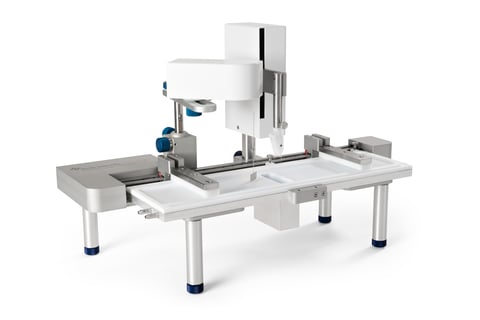
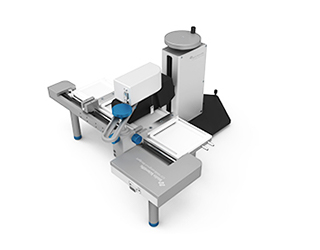
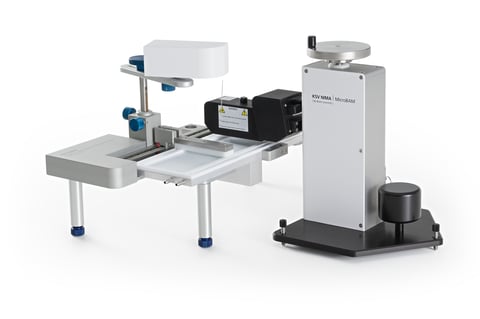
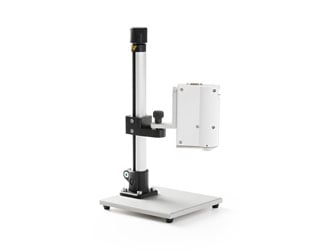
KSV NIMA offers two different Brewster Angle Microscopy models: KSV NIMA BAM and KSV NIMA MicroBAM. More information on these two instruments can be found on the BAM product page.